After stopping Tirzepatide, the file stays open
SURMOUNT-4 asked the question that a success story is tempted to skip.
The SURMOUNT-4 withdrawal trial
A trial earns my respect when it asks the awkward next question. SURMOUNT-4 first gave tirzepatide during an open-label lead-in, then randomised participants to continue or switch to placebo. This maintenance experiment began after initial treatment, giving it a different design from starting a new group on a drug.
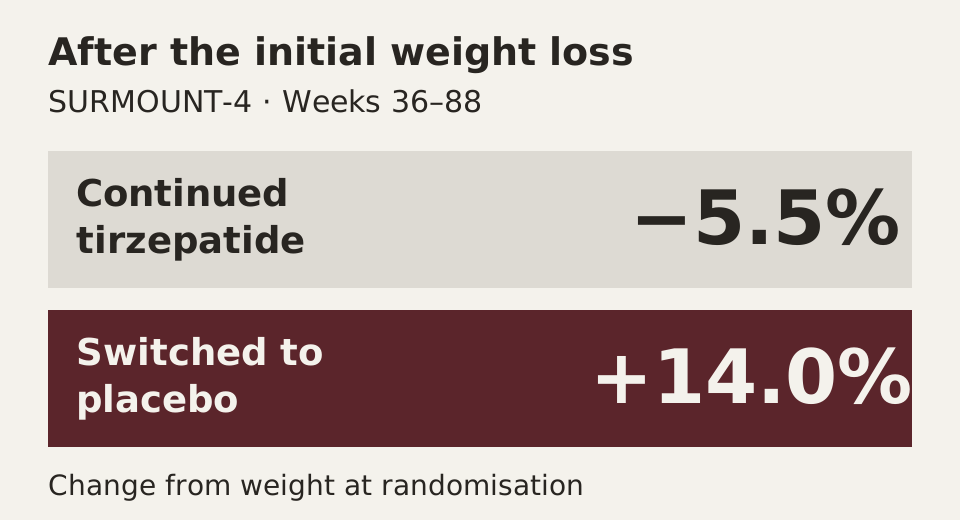
The trial randomised 670 participants after 36 weeks, when mean weight reduction was 20.9%. Between weeks 36 and 88, average weight change was -5.5% with continued tirzepatide and +14.0% after the switch to placebo. The starting point for those latter percentages is week 36. They cannot simply be added to the earlier percentage of starting weight.
Before this trial, I was too willing to imagine the final treatment weigh-in as a lasting destination. The withdrawal result puts the question of duration back where it belongs, inside the discussion of benefit.
Weight regain and metabolic markers
A post hoc SURMOUNT-4 analysis related regain to changes in cardiometabolic markers. Greater regain tracked with larger reversals in waist circumference, blood pressure, blood sugar and other risk factors. Post hoc means the researchers returned to the trial data for this further analysis; it does not make each association a newly randomised experiment.
Calling regain a purely cosmetic disappointment bothers me. These measurements suggest that some of the accompanying metabolic gains also depended on maintaining the loss. They do not prove that every future person will retrace the same path.
A systematic review of withdrawal across related medicines also found substantial regain after discontinuation. Its pooled figures combine semaglutide and tirzepatide, so I would not present that pooled amount as a tirzepatide-only prediction.
Maintenance and clinical decisions
The trial makes a strong case for taking maintenance seriously. It supplies no personal instruction to continue indefinitely, stop suddenly or adjust an amount. A prescriber makes those decisions by weighing benefit, tolerability and a person’s circumstances.
Extended follow-up in adults with obesity and prediabetes found sustained weight reduction and reduced progression to type 2 diabetes during treatment. The population matters here too: prediabetes and established diabetes are distinct conditions, and protection after stopping remains a separate question from prevention during treatment.
I would welcome more evidence on ways to preserve benefit after treatment changes. Until then, the dosage record and side-effect record deserve space in the same conversation as the weight figure. A medicine that produces a large change still has to fit an ongoing life.